Territory & Culture
Carano, Val di Fiemme — the village at 1,100 metres
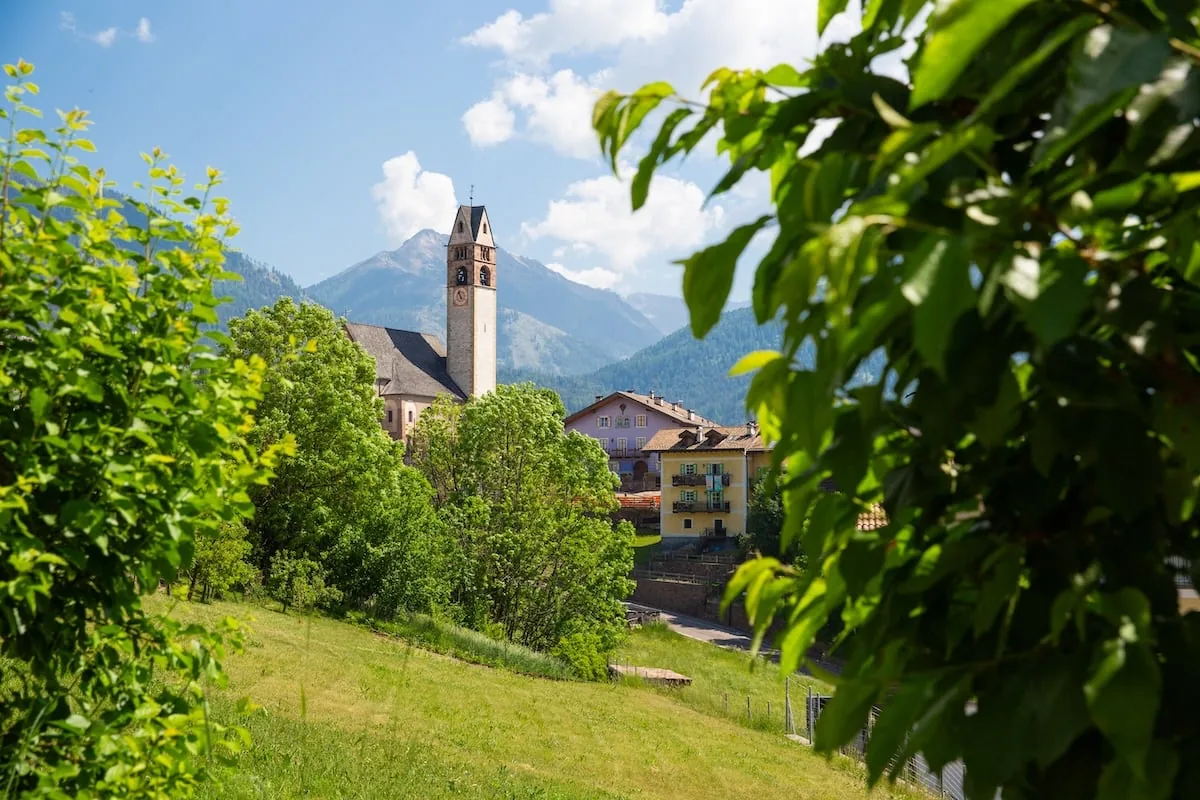
Carano is a village at 1,100 metres above sea level, a hamlet of Ville di Fiemme, 1.5 km from Cavalese. Sunny and panoramic position: from here the eye reaches as far as the Pale di San Martino. Trento is 60 km away (about 60 minutes by car), Bolzano 45 km away (about 50 minutes by car).
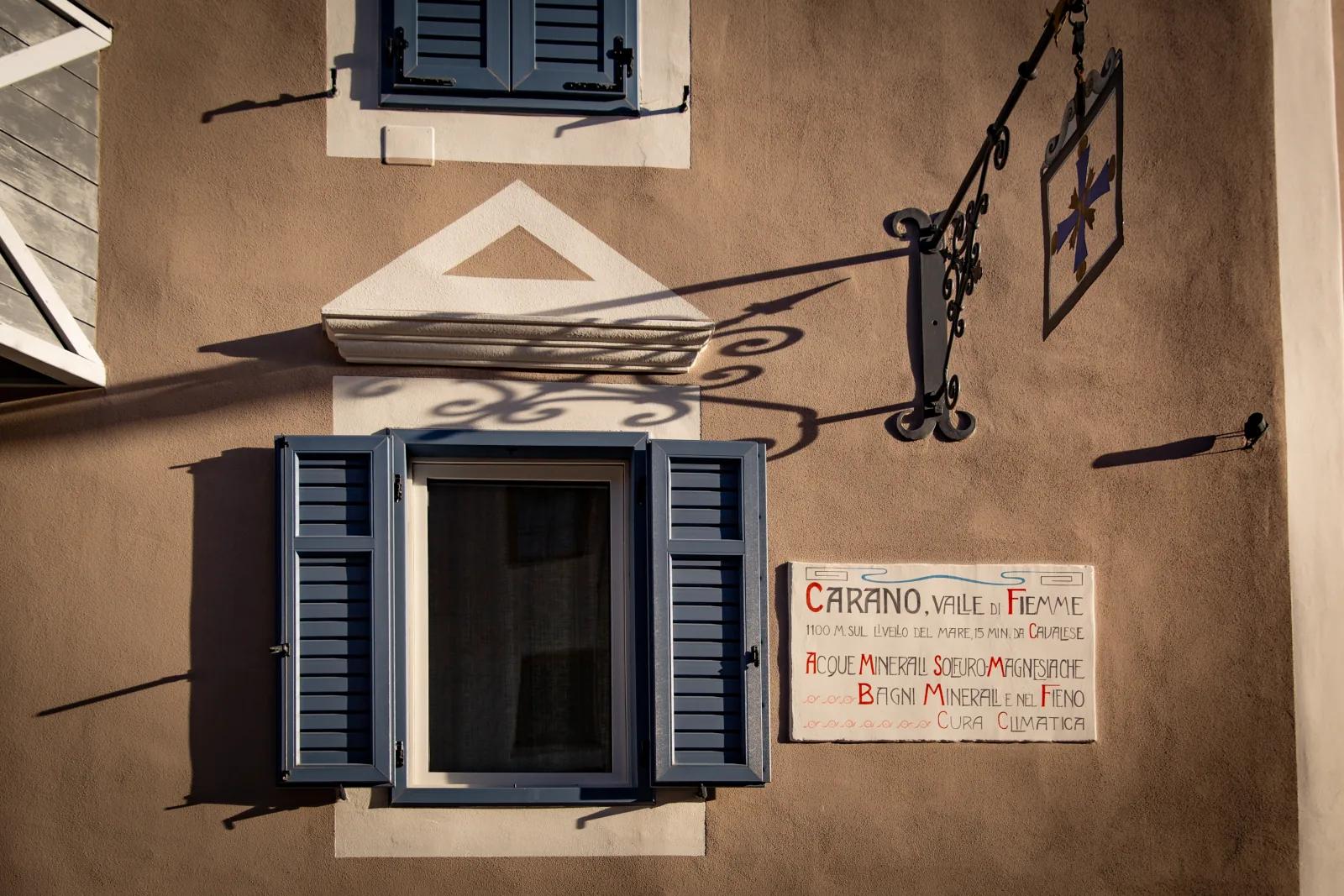
In the centre of the village is the Carano thermal spring - sulphur-magnesian mineral water, known for its beneficial effects on the skin, liver and bile ducts. The Delvai family has known this place for generations: Federico's great-grandfather brought hay from Passo Oclini, just a few kilometres away.
Map · Passo OcliniThe Ethnographic Museum of Carano
Claudio Delvai, Federico's father, directed the Casa Begna Ethnographic Museum of Carano for several years, strongly supported by mayor Giorgio Ciresa. A collection dedicated to the human and cultural heritage of the Fiemme community: woodland work, craftsmanship, daily customs, local gastronomy.
Map · The Ethnographic Museum of Carano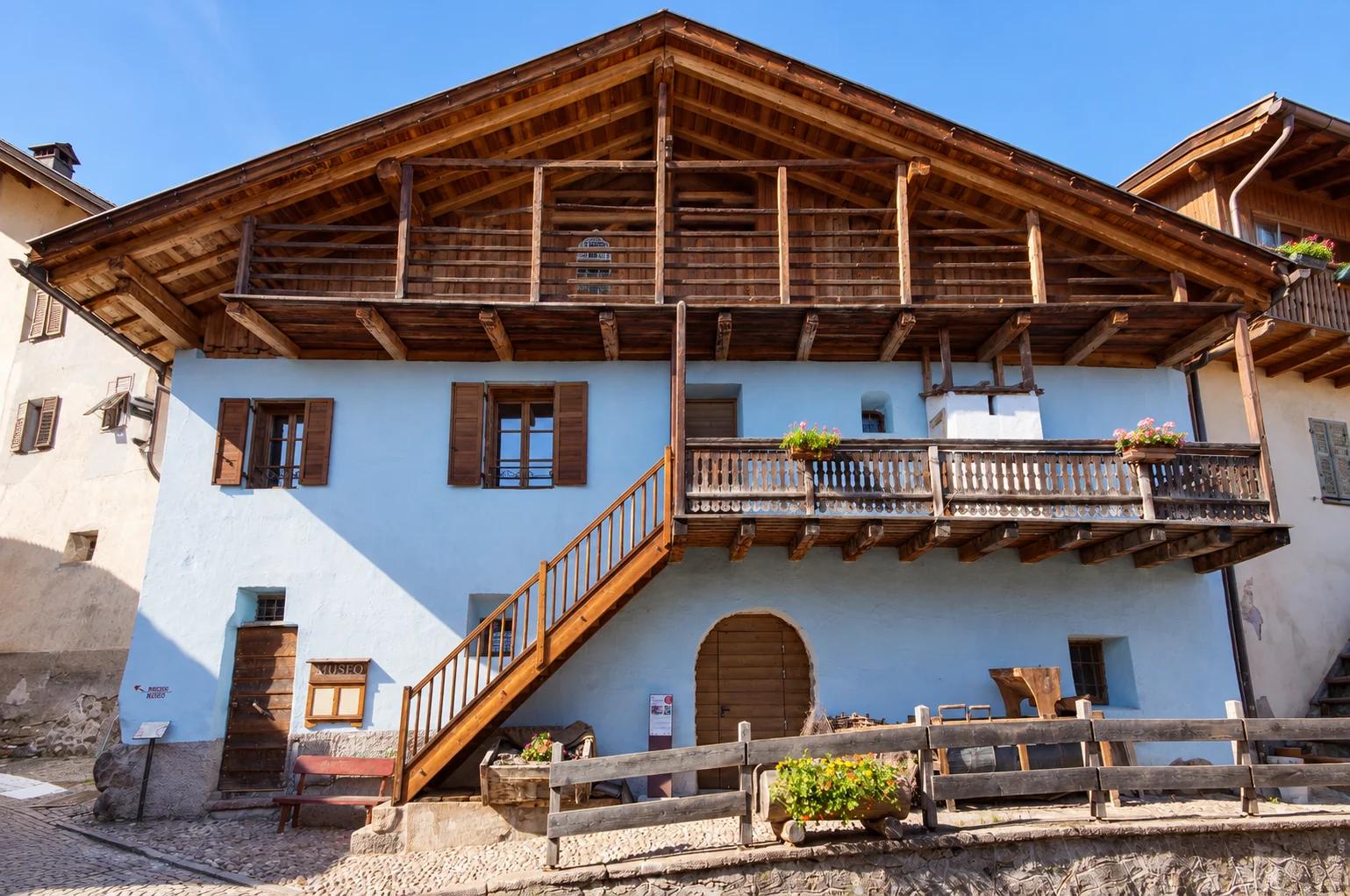
Casa Don Antonio Longo in Varena
This is the birthplace of priest and painter Antonio Longo (1742–1820), a member of the Fiemme School of painting. Restored and opened as a museum in 2015, it tells the story of the artist and his work.
The house retains the layout of a traditional Fiemme home: cellar and stable on the lower floor, living quarters and hayloft above. Longo frescoed the façades in 1770; around thirty of his works are displayed inside.
Map · Casa Don Antonio Longo in VarenaPalace of the Magnifica Comunità di Fiemme
In the centre of Cavalese, the palace was built as the seat of the vicar of the Prince-Bishop of Trento. Expanded and transformed during the 15th and 16th centuries, it now houses a museum and art gallery. Its collection includes a Renaissance fresco cycle probably attributed to Marcello Fogolino, works by the Fiemme School of Painting, and temporary exhibitions.
Photos: Renzo Micheletti and Emanuele Tonoli